

If you've ever found yourself with an empty printer cartridge right before an important deadline, or cringed at the cost of replacement cartridges, then you're likely looking for a printer with a large ink/toner supply and lower running costs. And that's where the tank printer comes in. But are tank printers worth it? In this blog post, we'll delve into this type of printer and offer some advice on whether switching to an ink tank printer is right for you.
Table of Contents
I. What is a Tank Printer?
II. Pros and Cons of Ink Tank Printers
III. Are Ink Tank Printers Worth It?
IV. When Should You Buy an Ink Tank Printer?
V. Frequently Asked Questions about Ink Tank Printers
I. What is a Tank Printer?
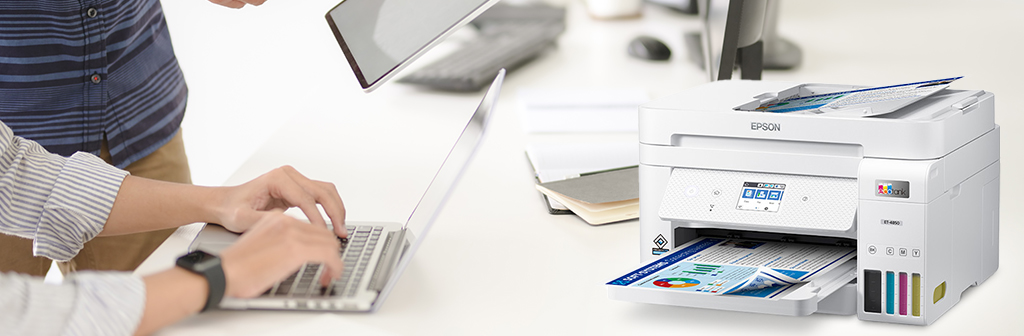
An ink tank printer (also known as a supertank printer or bulk ink printer) is a type of inkjet printer.
It uses large, refillable external ink tanks instead of traditional disposable cartridges. These ink tanks are usually transparent, allowing users to easily see the ink levels at a glance. Refilling is simply done by pouring bottled ink directly into the corresponding ink tank. This refill system significantly reduces the cost per page and minimizes plastic waste.
Major printer brands have launched their own product lines:
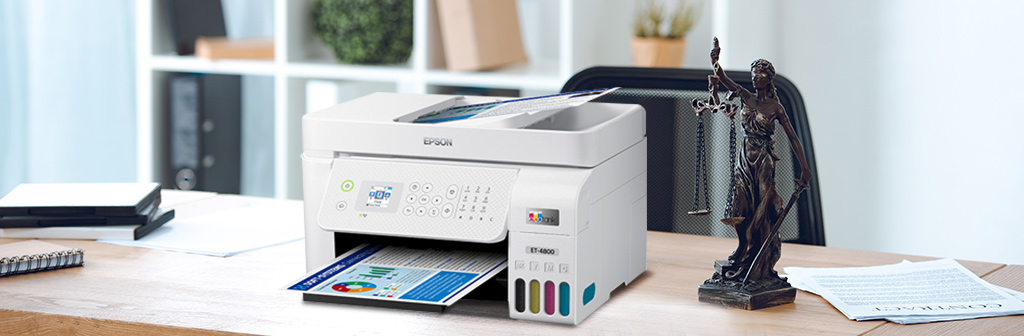
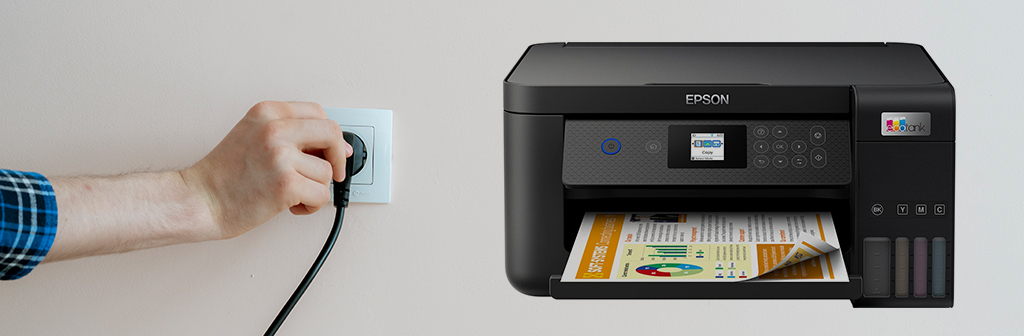
- Epson EcoTank: The most well-known brand, such as the Epson EcoTank ET-3850 all-in-one printer or the compact ET-2800.
- Canon PIXMA G Series (MegaTank): For example, the Canon PIXMA G6020 or the high-quality photo printer G620.
- HP Smart Tank: Popular models include the HP Smart Tank 580 or the 5100 series with all-in-one functionality.
These printers come in various models, including all-in-one devices (printing, scanning, copying, and sometimes faxing) and standard printers, catering to the needs of both home and office users.

A Quick Distinction: Brother INKvestment Tank
It's worth noting that while Brother INKvestment Tank printers have a similar name, their design does not utilize the classic ink tank system discussed in this article. Models like the Brother MFC-J4335DW use high-capacity integrated ink cartridges, not refillable ink tanks.
However, their goal is the same: to significantly reduce your cost per page and minimize the frequency of consumable replacements.
Therefore, despite the different operating principles, they ultimately save frequent users a considerable amount of money.
II. Pros and Cons of Ink Tank Printers
Pros:
- Extremely Low Cost Per Page: The headline benefit. For example, the Brother LC406XL ink cartridge can reduce black and white printing costs to $0.01 per page and color printing costs to $0.02 per page.
- High Page Yield: One ink bottle can typically print thousands of pages before needing replacement, especially high-capacity models like the LC504XL, LC506XL, and LC506XXL.
- Less Waste: Refilling ink bottles generates significantly less plastic waste than discarding ink cartridges.
- Clear Ink Levels: The clear ink tank design allows you to easily check the remaining ink levels.
Disadvantages of Ink Tank Printer:
- Higher Upfront Cost: Most ink tank printers are more expensive than traditional inkjet printers.
- Potential for Mess: Refilling ink requires careful handling to avoid spills, which can cause damage and stains.
- Risk of Clogging: If used infrequently, the printhead may become clogged.
- Generally Slower Speeds: Many tank printers are slower than comparable cartridge-based or laser printers when printing large volumes of text.

III. Are Ink Tank Printers Worth It?
Let's compare tank printers, laser printers, and traditional inkjet printers based on some key factors.
| Factor | Tank Printer | Traditional Inkjet | Laser Printer |
| Printer Cost | High upfront ($150–$600+) | Low upfront ($50–$150+) | Moderate upfront ($100–$300+) |
| Ink/Toner Cost | Low (bottled ink) | High (ink cartridges) | Moderate (toner cartridges) |
| Page Yield | Extremely high (thousands) | Low (hundreds per cartridge) | High (thousands per toner) |
| Long-Term Cost | Lowest for high volume | Highest over time | Low for text; color can be high |
| Print Quality | Excellent photo & color, very good text | Excellent photo & color, very good text | Sharp text, generally weaker photos |
| All-in-One Functions | Widely available (scanning/copying speed is adequate) | Widely available (similar performance to tank printer) | Widely available (often faster document handling) |
| Bulk Printing | Good for high-volume, slower on speed | Poor due to high cost and low yield | Best for fast, high-volume text |
| Maintenance | Risk of head clogs if unused | Risk of head clogs if unused | Minimal; toner doesn't dry out |
| Eco-Friendliness | Best (less plastic, refillable) | Worst (plastic cartridge waste) | Moderate (larger cartridges) |
| Best For (Ideal User) | High-volume color printing, home offices, families | Very low-volume printing, tight initial budget | High-volume text printing, offices, speed-critical users |
1. Initial Costs
The main price ranges for tank printers, traditional inkjet printers, and laser printers follow a pattern.
Traditional inkjet printers are the least expensive, with decent models like the HP ENVY 6155e available for just $50 to $150. This is very attractive for users with limited budgets. Tank printers like the Epson EcoTank ET-2850 require a higher initial investment, approximately $150 to $600. Laser printers fall somewhere in between, with moderate entry costs.
However, this initial impression is deceptive; the true cost becomes apparent over time.
2. Long-Term Costs
When evaluating total costs, you need to consider not only the printer price but also the cost of printing supplies.
For users with moderate to high printing volumes, tank printers are the most cost-effective because the cost per page is extremely low. Whether using standard or high-yield bottled ink, the cost is less than $0.10 per page. The higher initial purchase cost is usually offset within one to two years of regular use.
Cartridge-based inkjet printers can also print hundreds or thousands of pages. However, since traditional ink cartridges are more expensive than bottled ink, the cost per page is higher, ranging from $0.01 to $0.10 more. The cumulative cost of frequently replacing cartridges can quickly exceed the price of the printer itself.
Laser printers are also excellent for printing thousands of pages. For black-and-white text printing, these printers offer excellent long-term value, with a cost per page even cheaper than traditional inkjet and ink tank printers.
However, for color printing, the cost per page of laser printing is still significantly higher than the other two types of printers, costing about $0.02 more per page. Ink tank printers are undoubtedly the most economical choice for color printing.
Tips: For ink/toner, in addition to OEM options, you can also use compatible products to reduce printing costs while maintaining quality. The key is to choose a trustworthy third-party cartridge supplier such as YB Toner.

3. Print Quality and Speed
It's well known that inkjet technology is ideal for printing images, while laser technology excels at fast text printing.
Therefore, for vibrant photos and color graphics, both ink tank printers and traditional inkjet printers deliver excellent print quality. Generally, an ink tank printer like the Epson EcoTank Photo ET-8500 can print gallery-quality photos at a fraction of the ongoing cost of a cartridge-based printer.
Laser printers, on the other hand, can quickly print crisp, smudge-proof text, making them ideal for busy offices. While tank printers have improved in speed, they typically still lag behind laser printers in pure text output speed.
4. Print, Copy, Scan, Fax
All three types of printers have all-in-one models available, but their performance in these tasks varies.
The basic models of all three types are capable of scanning and copying. Higher-end models will also feature an automatic document feeder (ADF) for handling multi-page documents, such as the HP Color LaserJet Pro MFP 4301fdw. Laser printers like the Brother MFC-L8905CDW and Canon Color imageCLASS MF753Cdw offer faster scan-to-email speeds and more robust ADF capabilities, such as duplex ADF.
Faxing is becoming less common, but some business-oriented ink tank and laser printers still include this feature. Common examples include the Epson EcoTank ET-15000, Brother MFC-L2820DW, Brother MFC-L3720CDW, Canon imageCLASS MF465dw, etc.
It's also worth noting that laser printers generally offer faster and more efficient document handling capabilities for small offices.
5. High Volume Printing
For text-heavy bulk printing, monochrome laser printers are unmatched, offering superior speed and durability. Color laser printers can also handle high volumes, but the cost of printing color pages is higher than with ink tank printers.
Tank printers are the most cost-effective solution for high-volume color printing. Models like the HP Smart Tank 5101 are designed for this purpose, printing up to 6,000-8,000 pages.
Traditional cartridge-based inkjet printers are not suitable for high-volume printing due to the high cost and frequent replacement of ink cartridges. However, for the Brother INKvestment Tank printer with expanded capacity ink cartridges, this type of innovative inkjet printer is well-suited for high-volume printing.
6. Durability, Maintenance, Environment
Toner doesn't dry out, making laser printers reliable and ideal for intermittent use, even if left unused for a year. The other two types of inkjet printers require regular printing to prevent ink from drying out and clogging the print head.
From an environmental perspective, tank printers generate the least waste due to refillable bottles. Traditional cartridge-based inkjet printers are the most polluting because they use disposable cartridges. While laser toner cartridges are larger, they need to be replaced much less frequently.
Discover More: Blogs You Might Love
- Inkjet vs Laser Printers: Which Printer Should You Choose?
- DeskJet vs InkJet vs LaserJet: What Are the Differences?
- Brother INKvestment vs Epson EcoTank: Which Is Better?
- Canon PIXMA vs HP DeskJet: What’s the Difference?
- Canon PIXMA vs Epson EcoTank, What’s the Difference?
- Canon vs Epson Photo Printers, Which One to Choose?
- Epson vs Brother: Which is the Popular Printer Brand?
- HP Envy vs OfficeJet: What’s the Difference?
- How Much Does Toner Cost?
IV. When Should You Buy an Ink Tank Printer?
Deciding on a printer often feels like a trade-off: pay less now but more later, or invest more upfront for long-term peace of mind. Ink tank printers fall into the latter category. Let's analyze the situations in which an ink tank printer is the best choice.
You will be an ideal user and reap the greatest benefits if:
- You print 100+ pages per month. Your frequent use will allow you to quickly recoup the higher initial cost through dramatic ink savings.
- Your printing often includes color or photos. Ink tank printers excel at reducing the cost of color printing.
- You are environmentally conscious. Ink tank printers use refillable ink bottles.
You should think twice and likely consider a laser printer if:
- You print fewer than 20-30 pages per month. Infrequent use is the Achilles' heel of any inkjet technology, including tank printers, due to the risk of printhead clogs. A basic monochrome laser printer is often more reliable for occasional use.
- Your needs are 90% text, and speed is critical. If you primarily print black-and-white documents and value fast, instant output, then a laser printer is preferable.
- Your initial purchase budget is limited and inflexible. If the initial cost of an ink tank printer is a barrier, then a basic traditional inkjet printer or an entry-level laser printer will suffice.

V. Frequently Asked Questions about Ink Tank Printers
1. Ink tank printer vs laser printer: which is better?
This depends on your main printing needs and usage habits.
If you need to print a large number of color documents or photos and want a cost-effective per-page printing cost in the long run, we recommend an ink tank printer. It's suitable for color-heavy home users, students, and crafters.
If you print a large number of text documents, or if you don't print frequently but require the highest reliability (toner doesn't dry out), then choose a laser printer. It's ideal for text-focused home offices and businesses.
2. Inkjet vs ink tank printer: which is better for home use?
This depends on your printing volume. If you print only one to a dozen pages, a traditional inkjet printer will suffice, as the printer price is low and the ink cartridges won't run out quickly. However, if you print more, an ink tank printer is usually a better option, offering a huge page yield and low cost per page. See the blog post Ink Tank vs Cartridge: Which Printer System Saves More Money for more information.
3. Are ink tank printers better than cartridges?
For those who print frequently, the answer is yes, without a doubt. Ink tank printers have lower ink costs, are more environmentally friendly, and reduce the hassle of constant cartridge replacements.
4. Are ink tank printers cheaper?
For the same volume of color printing, tank printers are more cost-effective in the long run. Although these printers have a higher initial price, the cost of replacing ink is lower. Over time, the total cost will be lower than that of cartridge printers within one or two years. However, for the same volume of text printing, laser printers are recommended, as they have a lower initial price and the toner cartridges last for a long time.
5. Do ink tank printers dry out if not used?
If a printer is not used for several months, the ink in the print head may dry out and clog. This is a common problem with all inkjet printers (including ink tank printers). We recommend printing a few pages regularly every two weeks to keep the system healthy. Laser printers do not have this issue.
6. Is an ink tank printer good for home use?
Absolutely. Due to its versatility and affordability, it's one of the best choices for modern families. It can handle a variety of documents, from parents' tax forms and teenagers' research papers to printing family photos and holiday cards, all without breaking the bank on ink.
VI. Conclusion
So, are tank printers worth it? The answer is yes, for the right users. If you do a lot of color printing and are tired of the hidden costs associated with expensive ink cartridges, then an ink tank printer will be a smart and sustainable purchase.


